
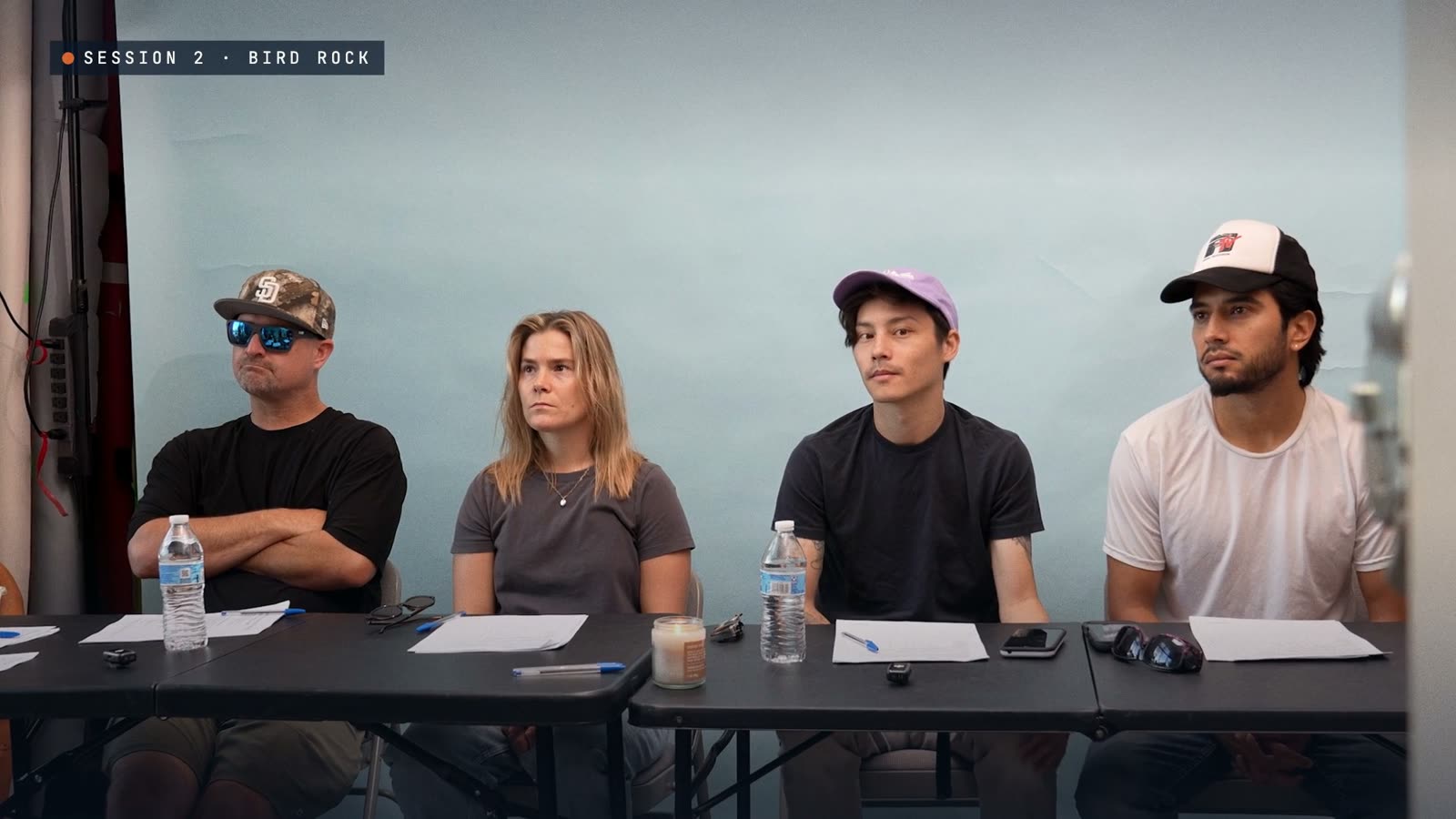
Two focus groups, filmed on two cameras and cut the same afternoon, so the research got watched instead of filed.
Real reactions from the second session, then Saturday by the clock. Every time on screen is a file timestamp.
The goal
A San Diego founder had a new formula and a can he wasn’t sure about. Before spending on shelf space, sampling or media, he wanted to hear it from strangers. Good Call Co. designed and ran the research: two sessions, thirteen people, a blind taste test, the brand revealed last.
Our half was the camera and the cut. Film both rooms, and get what those thirteen people said in front of the founders fast enough to matter, in a form they would actually sit through.
What we found
Research rarely dies of bad insight. It dies in a folder.
I’ve watched it happen to good work. A sixty-page deck gets skimmed once. Two hours of footage never gets opened. The one answer that would have changed the meeting sits forty minutes into a tape nobody scrubs. The research wasn’t the problem in those rooms. The format was.
So the brief wasn’t more research. It was speed, and a format a busy owner and his partner would watch together.
How it was built
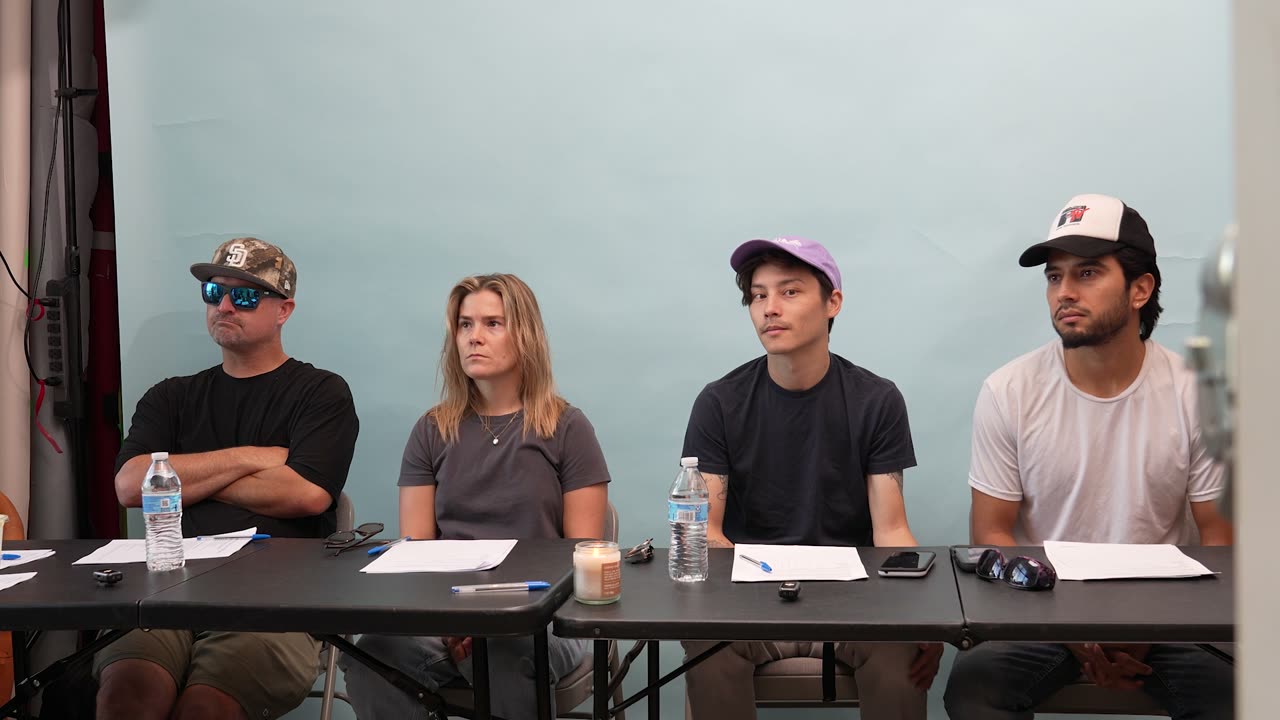
Two cameras, every minute
One camera on the table for first sips and the quiet writing rounds, one wide for the room. Consent and recording releases signed at the door. Nobody looks at a lens; everyone writes before they talk.
The same-day cut
Workbooks photographed before anyone left the building and scored into a sheet. The audio transcribed, every answer logged by question and speaker, then cut into labeled reels: the tasting, the habits, the vote, the can, the check-ins.
Then, a screen
The written report rebuilt as an animated piece, sixteen scenes, every chart in motion. Then an eleven-minute documentary with narration and a score, made for the founders’ strategy session.
Saturday, by the clock.
- Doors open. Seven people, the second session.
- Doors close. Workbooks go straight to the scanner.
- Every workbook page is a row in the score sheet.
- Five reels, a full assembly, and a combined cut of both sessions.
- The findings deck, every number sourced to a page.
- The written report, first edition.
- The week after
- The report, animated: sixteen scenes, 4 minutes 19.
- The narrated documentary, 11 minutes, voice and score.
Where the numbers come from
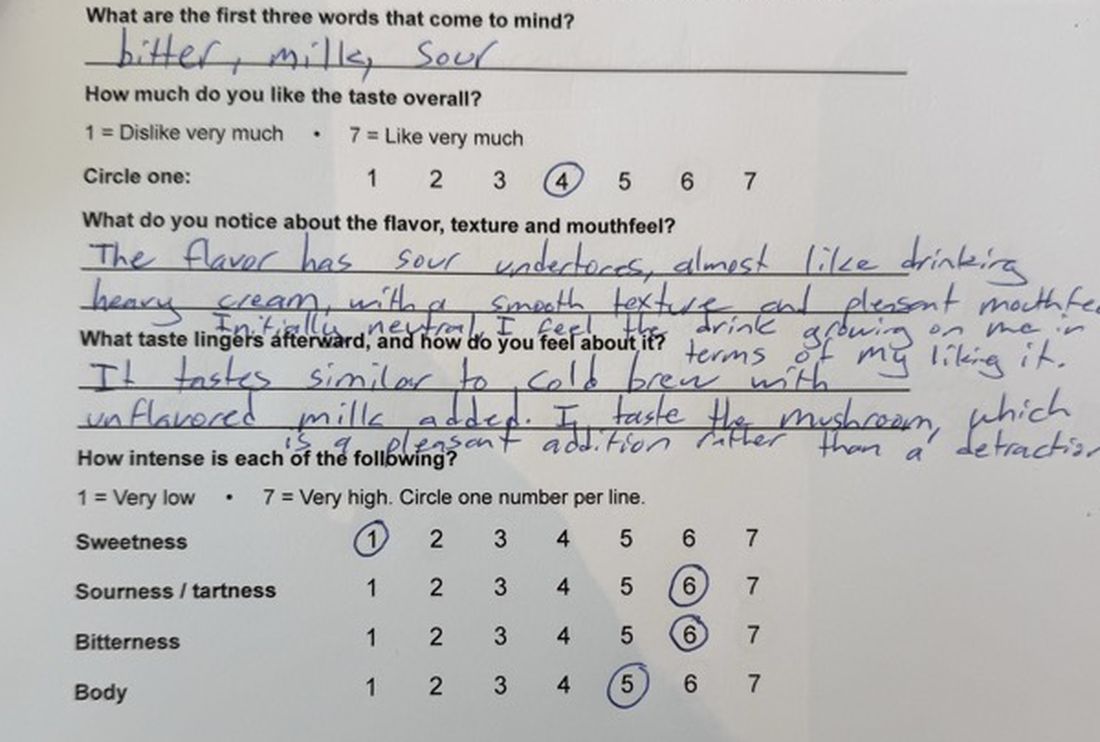
A focus group produces two kinds of evidence: what people say out loud, and what they write down before anyone else in the room can sway them. The written half is the more honest one, and it’s the half that usually goes missing. Nine pages per person end up in a box, and the report quotes the loudest voice instead.
We treated the paper like a ledger. Every page was captured, every answer entered, every number checked against the tape, and nothing filled in that a participant didn’t write.
- CaptureEach 9-page workbook photographed at the table, page by page.
- EnterRatings, words, reasons and prices copied as written, one row per person.
- ScoreRatings on the same 1–7 scales, so Thursday and Saturday line up.
- Cross-checkWhat each person wrote, matched against what they said on camera.
- SourceEvery chart and line in the report points back to a page or a timecode.
| ID | A like | B like | Pick | Buy* |
|---|---|---|---|---|
| P7 | — | 2 | A | 6 |
| P8 | 4 | 1 | A | 5 |
| P9 | 7 | 2 | A | 5 |
| P10 | 6 | — | A | 3 |
| P11 | 5 | 3 | A | 5 |
| P12 | 5 | 3 | B | 2 |
| P13 | — | — | B | 6 |
The rules we don’t bend
- Written before spoken.People commit on paper first, so the loudest person at the table can’t set everyone else’s answer.
- A blank stays blank.If a rating wasn’t circled, the cell stays empty. A guessed number would look like data and isn’t.
- Show the arithmetic.When someone wrote a price range, it’s scored at the midpoint and the note says so: $2.50–$4 becomes $3.25.
- Fact and read, kept apart.“What the data says” sits in its own box. What we think it means sits in another, so the founders can disagree with the read without doubting the count.
- Check the plan against the record.After Thursday, the guide was compared line by line with what the tape and the workbooks actually show. Saturday was set from it: the open framing, since Thursday had run the coffee one, and two spoken check-in rounds added.
I don’t trust a finding I can’t trace. That’s the whole method: if a number is on a slide, you can follow it back to a page someone wrote on, or a second of tape where they said it.
What the client got
- Every answer from both sessions as its own labeled clip, by question and speaker.
- Five theme reels and a full assembly for each session, plus a combined cut.
- A findings deck the same afternoon, and the written report by 2:14 PM.
- The report animated, sixteen scenes, for anyone who won’t read fourteen pages.
- An eleven-minute narrated documentary for the strategy workshop.
The report
The first edition, fourteen pages, went out at 2:14 that Saturday. By Tuesday it was eighteen, with both sessions side by side. We built it like a magazine rather than a slide dump: one question per page, one chart drawn for that question, and a “What the data says” box under every finding. Every chart is drawn from the score sheet above.
Tap any page to read it full size. The client’s name is blacked out until launch.
Why it matters
A launch decision gets made in one meeting. If the evidence isn’t in that room, in a form people will watch, it might as well not exist.
Here the founders walked into their strategy session having already watched thirteen strangers taste their drink blind, pick the new formula, and mistake the can for an energy drink. That’s a different meeting from one with a PDF on the table. What they changed next was their call. What they saw was not up for debate.
Research by Good Call Co., the advisory practice I run with Dustin Smalley. Dustin designed the guide and moderated both rooms. The findings, the personas and the recommendation are theirs to tell.
Read the research →Research and moderation · Good Call Co. · Dustin Smalley
Directed by · Oz Riveros
Report design and infographics · Oz Riveros, for Good Call Co.
Camera, edit, animation and film · A Lead Wolf production, Bird Rock, La Jolla
Everyone on camera signed a release for this film. The client’s name stays off this page until they launch.